Aperture-
Also called aperture stop. Optics. an opening, usually circular, that limits the quantity of light that can enter an optical instrument
Dept of field-
the amount of distance between the nearest and farthest objects that appear in acceptably sharp focus in a photograph.
Darkroom-
Darkened place for developing photographs
Developer-
reducing agent or solution that renders film visible
Enlargement-
Act of enlarging; increase, expansion, or amplification
F-stop-
The setting of an adjustable lens aperture, as indicated by an f number
Fixer-
A chemical preservative used to fix a photographic image
ISO-
the numerical exposure index of a photographic film under the system adopted by the International Standardization Organization, used to indicate the light sensitivity of the film's emulsion
Panning-
To move a movie or television camera to follow an object or create a panoramic effect.
Single-lens reflex camera (SLR)-
A single-lens reflex camera, also known as a SLR camera, is a camera where the photographer is able to see exactly what the film will capture by looking through the viewfinder. This is done by using a reflex mirror and a pentaprism to project the image through the lens to the viewfinder.
Stop bath-
chemical bath usually used in processing traditional black-and-white photographic films, plates, and paper used after the material has finished developing.
Telephoto lens-
A telephoto lens is any lens that contains a grouping of telephoto elements. This results in a lens with a long focal length, such that the lens itself is shorter than its own focal length. Telephoto lenses can be used to magnify distant subjects or to achieve zoom effects.
View camera-
camera equipped with a lens mount and film holder that can be raised or set at an angle, a bellows that can be additionally extended, and a back that has a ground glass for focusing, used especially for portraits and landscapes
Viewfinder camera-
a device on a camera, consisting of a lens system and sometimes a ground-glass screen, enabling the user to see what will be included in his photograph Sometimes shortened to finder
Zoom lens-
(in a camera or motion-picture projector) a lens assembly whose focal length can be continuously adjusted to provide various degrees of magnification without any loss of focus, thus combining the features of wide-angle, normal, and telephoto lenses
Continuous tone photography-
image is one where each color at any point in the image is reproduced as a single tone, and not as discrete halftones, such as one single color for monochromatic prints, or a combination of halftones for color prints
Lens-
glass for changing the convergence of light rays, used in eyeglasses, telescopes, etc.
Telephoto lens-
lens constructed so as to produce a relatively large image with a focal length shorter than that required by an ordinary lens producing an image of the same size: used to photograph small or distant objects
Wide angle lens-
(Miscellaneous Technologies / Photography) a lens system on a camera that can cover an angle of view of 60° or more and therefore has a fairly small focal length See also fisheye lens
Shutter-
a mechanical device that limits the passage of light; especially : a camera component that allows light to enter by opening and closing an aperture
Tuesday, 5 March 2013

Monday, 4 March 2013
CMT ASSIGNMENT X2
4. What is a megapixel?
A megapixel is one million pixels, and is a term used not only for the number of pixels in an image, but to express the number of image sensor elements of digital cameras or the number of display elements of digital displays.
5.Name and copy the adress of three websites that provide tips for photographers.
Photo Net
http://photo.net/community/
Photo Shelter
http://www.photoshelter.com/
Digital Photography School
http://digital-photography-school.com/
6. What are three tips for taking better photos that you find interesting.
Take the picture close up.
The Angle of the camera depends on how well the picture looks.
Editing the photo can help it make alot clearer.
A megapixel is one million pixels, and is a term used not only for the number of pixels in an image, but to express the number of image sensor elements of digital cameras or the number of display elements of digital displays.
5.Name and copy the adress of three websites that provide tips for photographers.
Photo Net
http://photo.net/community/
Photo Shelter
http://www.photoshelter.com/
Digital Photography School
http://digital-photography-school.com/
6. What are three tips for taking better photos that you find interesting.
Take the picture close up.
The Angle of the camera depends on how well the picture looks.
Editing the photo can help it make alot clearer.
CMT 11 ASSIGNMENT
1. Briefly explain what a digital camera is.
A camera that records and stores digital images.
2. Name and describe 5 common features found in the latest digital cameras on the market.
Resolution
This term refers to the sharpness, or detail, of a picture.
Memory
Digital cameras store pictures as data files rather than on film.
Flash Type
A flash, of course, is the extra light needed to shoot inside or in low-light conditions.
LCD Screen
This screen will let you see what the photo will look like and, typically, let you see what you've already taken and erase what you don't need.
Manual FeaturesAvailable on high end cameras, these give more serious photographers more creative control.
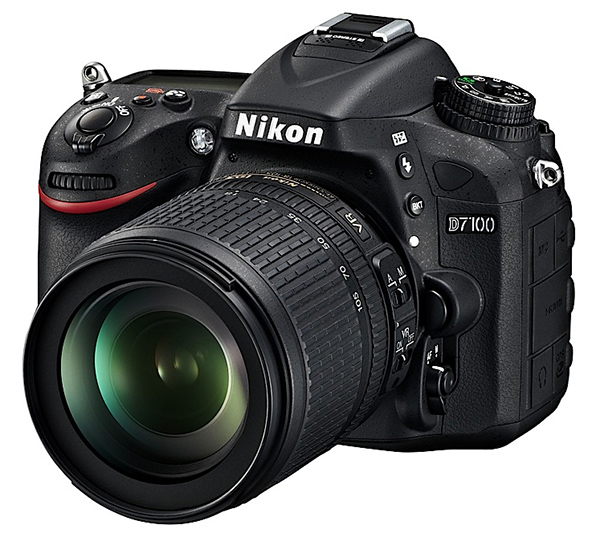
3. Insert a picture of 3 different cameras - try and show different angles!
A camera that records and stores digital images.
2. Name and describe 5 common features found in the latest digital cameras on the market.
Resolution
This term refers to the sharpness, or detail, of a picture.
Memory
Digital cameras store pictures as data files rather than on film.
Flash Type
A flash, of course, is the extra light needed to shoot inside or in low-light conditions.
LCD Screen
This screen will let you see what the photo will look like and, typically, let you see what you've already taken and erase what you don't need.
Manual FeaturesAvailable on high end cameras, these give more serious photographers more creative control.
3. Insert a picture of 3 different cameras - try and show different angles!


Subscribe to:
Comments (Atom)